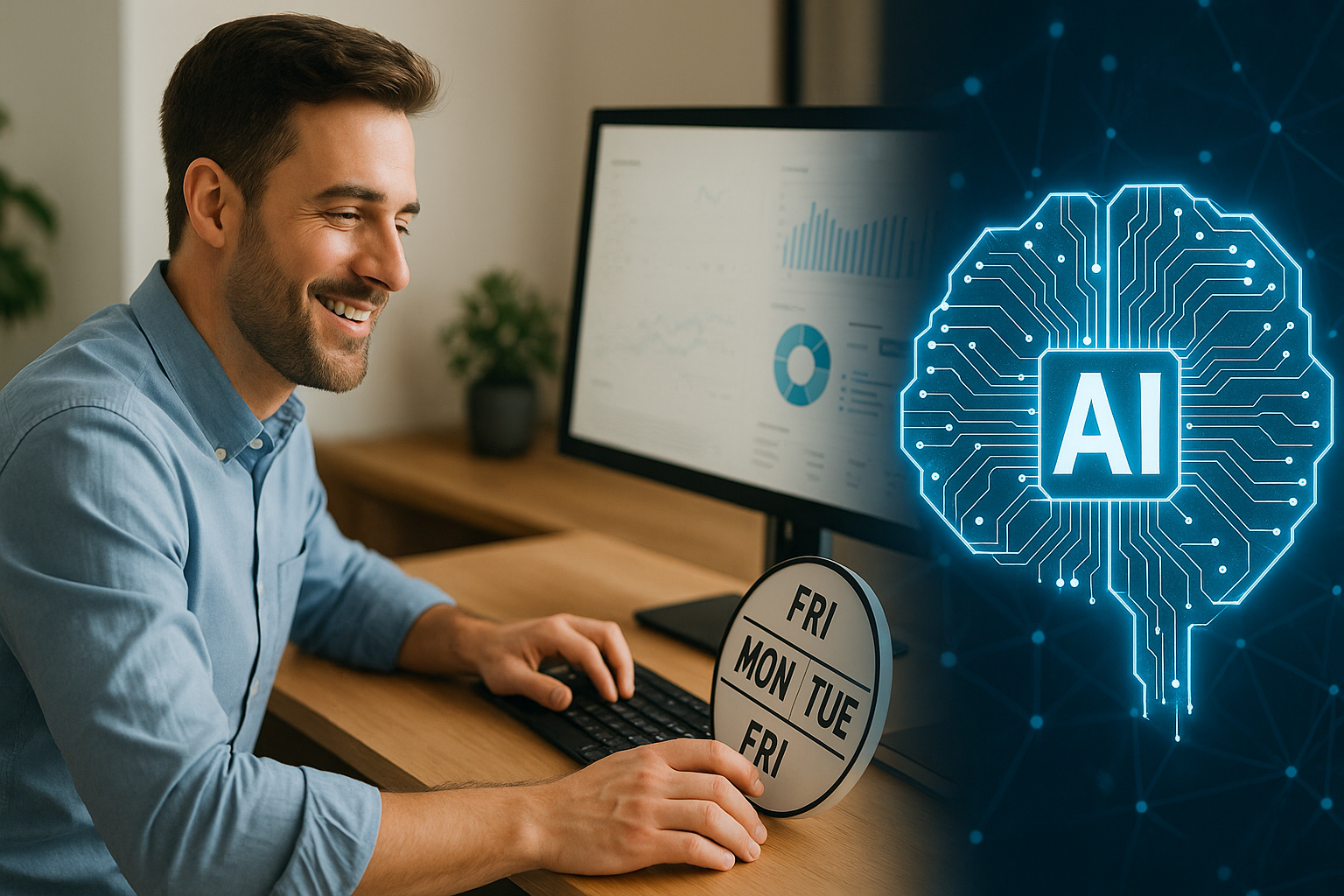
The concept of a reduced workweek has been around for decades, often discussed as a way to improve employee well-being and productivity. In recent years, the rise of artificial intelligence has added a new dimension to this idea. An AI-driven reduced workweek uses technology to optimize tasks, streamline workflows, and make it possible for employees to work fewer hours without sacrificing output.
In plain terms, AI can help organizations identify which tasks are most important, automate repetitive work, and even predict busy periods, allowing teams to focus on what truly matters. This approach has been gaining attention because it promises a balance between efficiency and personal time—a goal many companies and employees are striving for in modern workplaces.
In this article, we’ll explore what an AI-driven reduced workweek looks like, its benefits, the ways AI can make work more efficient, potential challenges, and real-world examples of how businesses are putting this idea into practice.
Understanding the AI-Driven Reduced Workweek
An AI-driven reduced workweek is more than just cutting hours. It’s a strategic approach where artificial intelligence tools help manage workloads, prioritize tasks, and automate repetitive processes. Unlike traditional reduced workweeks, which simply shorten the work schedule, AI-driven approaches aim to maintain or even improve productivity while giving employees more free time.
Traditional reduced workweeks often rely on human judgment to decide what gets cut or rescheduled. This can lead to bottlenecks or uneven distribution of tasks. With AI, software can analyze patterns, predict workload spikes, and recommend scheduling adjustments. For example, an AI system can suggest the optimal time for meetings, identify tasks that can be automated, or even flag projects that might need additional resources.
In essence, AI enables smarter work planning. It doesn’t just reduce hours—it ensures the remaining hours are used effectively, helping employees work smarter rather than harder.
Benefits of an AI-Enhanced Shorter Workweek
One of the most compelling aspects of an AI-driven reduced workweek is its potential to improve both employee satisfaction and business outcomes. For employees, a shorter workweek means more time for personal pursuits, rest, and family life. When combined with AI’s ability to streamline workflows, employees can focus on high-value tasks without feeling rushed or overwhelmed.
Productivity often improves under these conditions. When AI handles routine or repetitive tasks, employees can devote their energy to problem-solving, creative thinking, and tasks that require human judgment. This shift can lead to a more engaged and motivated workforce.
Companies also benefit from cost and resource efficiency. AI can reduce wasted effort, minimize errors, and free up staff time for strategic initiatives. Moreover, the integration of AI into work planning can encourage innovation. Teams have more space to experiment and develop new ideas, which can drive growth and competitive advantage.
The AI-driven reduced workweek creates a win-win scenario: employees gain more free time, and organizations maintain or even boost their performance.
How AI Makes Workweeks More Efficient?
The efficiency of an AI-driven reduced workweek comes from several key capabilities. One of the main tools is task automation. Repetitive or administrative tasks, such as data entry, scheduling, or routine reporting, can be handled by AI, freeing up employees to focus on tasks that require creativity or critical thinking.
Another important element is intelligent scheduling. AI can analyze patterns in employee performance, workload, and deadlines to suggest the most effective way to distribute tasks. For example, the system might recommend completing high-priority projects during peak productivity hours or rescheduling low-priority work to quieter periods.
Predictive analytics also plays a role. By analyzing past data, AI can forecast periods of high demand, potential bottlenecks, or upcoming deadlines. This allows managers to plan ahead, allocate resources efficiently, and prevent burnout.
Everyday examples of AI in the workplace include smart calendar assistants that optimize meeting schedules, AI-driven project management tools that track progress and suggest next steps, and chatbots that handle routine customer queries. All of these applications contribute to a smoother, more efficient workflow, making it possible to maintain output even with fewer work hours.
Challenges and Considerations
While the AI-driven reduced workweek offers many benefits, it also comes with challenges. One concern is the risk of over-reliance on AI. Technology can optimize tasks, but it cannot replace human judgment entirely. Decisions about priorities, strategy, and creativity still require a human touch.
Resistance from employees or management is another consideration. Some may feel uneasy about AI monitoring or directing workflows, fearing a loss of autonomy or job security. Open communication and education about the purpose and benefits of AI are crucial to overcoming this hurdle.
Ethical and privacy concerns also need attention. AI systems often rely on large amounts of data, including employee activity. Companies must ensure that data is handled responsibly, with transparency about how it is used.
Finally, successful implementation requires careful planning. Organizations should start with pilot programs, gather feedback, and adjust processes gradually. A thoughtful approach ensures that AI complements human work rather than creating stress or confusion.
Real-World Case Studies
Several companies have begun experimenting with AI-driven reduced workweeks, and their experiences offer valuable lessons. For instance, a technology firm used AI to automate routine reporting and manage project timelines. Employees moved to a four-day workweek without a drop in productivity. In fact, the company reported higher engagement and fewer errors.
Another example comes from a marketing agency that implemented AI tools for scheduling and task management. By reducing manual planning, the team was able to focus on creative campaigns and client interactions. The outcome was not only a shorter workweek but also improved campaign quality and client satisfaction.
These case studies show that success requires more than just installing AI software. It depends on integrating technology thoughtfully, training employees, and continuously refining processes based on real-world outcomes.
Planning Your AI-Driven Reduced Workweek
For organizations considering this approach, careful planning is essential. Start by assessing which tasks can be automated or optimized through AI. Identify repetitive work that consumes significant time but adds little value.
Next, explore the tools and technologies that fit your business needs. This may include project management platforms with AI capabilities, smart scheduling software, or analytics tools that predict workload trends.
Employee onboarding is another key step. Staff should understand how AI will support their work, not replace it. Training and clear communication help build trust and ensure smooth adoption. Gradually implementing changes, monitoring results, and gathering feedback will make the transition more effective.
A structured plan ensures that an AI-driven reduced workweek enhances productivity while providing the intended benefits for employees.
Conclusion
The AI-driven reduced workweek represents a promising shift in how we think about work. By combining shorter hours with smart technology, companies can maintain productivity, reduce stress, and foster creativity. Employees, in turn, gain more personal time without compromising their professional goals.
While challenges such as over-reliance on AI, resistance, and privacy concerns exist, careful planning and thoughtful implementation can address these issues. The key is to use AI as a tool to support humans, not replace them, and to maintain a balance between efficiency and well-being.
As businesses explore this approach, the AI-driven reduced workweek may become a standard strategy for achieving smarter, more sustainable work practices—offering a future where both people and organizations thrive.
FAQs
What is an AI-driven reduced workweek?
It’s a shorter workweek supported by AI tools that optimize tasks, automate routine work, and maintain or boost productivity.
How does AI help reduce work hours?
AI analyzes workloads, prioritizes important tasks, automates repetitive work, and predicts busy periods, allowing employees to focus on what matters most.
Can all companies use an AI-driven reduced workweek?
Most companies can, but implementation depends on workflow type, available AI tools, and employee readiness to adapt.
What are the main benefits?
Higher productivity, better work-life balance, reduced stress, and more time for creativity and strategic projects.
Are there risks involved?
Yes, over-reliance on AI, privacy concerns, and resistance from staff or management. Careful planning and communication help mitigate these risks.
Disclaimer:
This article is for informational purposes only. It does not provide legal, financial, or workplace policy advice. Results may vary based on company, industry, and AI tools used. Always assess feasibility and consult professionals before implementation.

My name is Mustafa, and I have been blogging for over 5 years. I am passionate about sharing complete, accurate, and helpful information with my readers. Along with managing content on The Matcha Read, I also contribute blog posts to premium websites. My goal is to provide valuable insights in a clear and easy-to-understand way, so every reader walks away with useful knowledge.