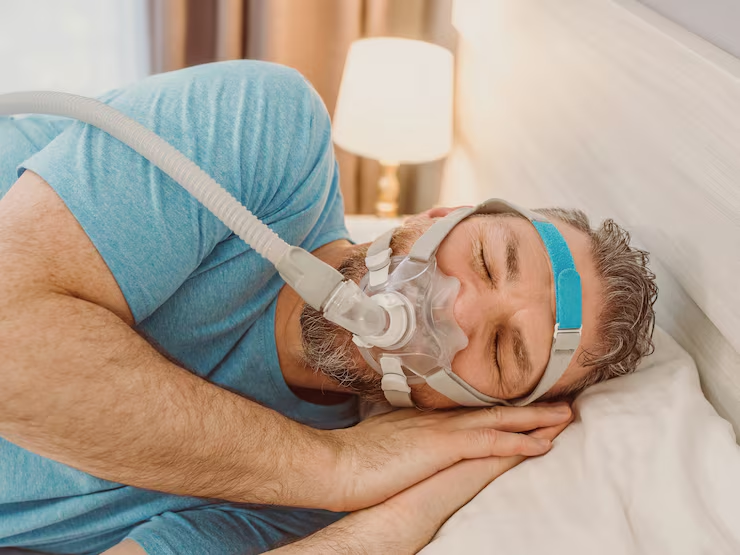
Maybe you’ve wondered if sleep apnea is just about loud snoring—or if it could ever be something far more serious. For many people, the idea that a common sleep disorder might be life-threatening sounds surprising. Yet, research shows that untreated sleep apnea can lead to serious health complications over time.
In this article, we’ll explore can sleep apnea kill you by looking at what medical evidence says, how the condition affects the body, and why timely treatment can make a real difference to your long-term health. You’ll also learn from expert insights and practical tips that can help you or someone you care about sleep better and live healthier.
Understanding Sleep Apnea: Types & Fundamentals
What Is Sleep Apnea?
Sleep apnea is a condition where your breathing repeatedly stops and starts while you sleep. These pauses can last a few seconds to a minute, and they often happen many times in a single night. Because of this, your body doesn’t get the steady oxygen supply it needs, and the quality of your sleep suffers.
There are two main types:
- Obstructive Sleep Apnea (OSA): This is the most common form. Imagine your airway like a busy road—when muscles in your throat relax too much, they cause an “airway traffic jam,” blocking airflow.
- Central Sleep Apnea (CSA): This is less common and more complex. Here, your brain momentarily “forgets” to tell your body to breathe—like a communication glitch in your body’s control center.
Both types disrupt sleep, but their causes and risks are different.
Obstructive vs. Central: Different Risks
| Feature / Risk Factor | Obstructive Sleep Apnea (OSA) | Central Sleep Apnea (CSA) |
| Cause | Airway blockage from relaxed throat muscles during sleep | Brain fails to send proper breathing signals to the muscles |
| Common Triggers | Obesity, enlarged tonsils, nasal blockage, alcohol, sedatives | Heart failure, neurological disorders, certain medications |
| Oxygen Drop Impact | Repeated dips in oxygen strain the heart and increase blood pressure | Oxygen drops can be more severe due to complete lack of breathing effort |
| Health Risks | Hypertension, stroke, heart disease, daytime fatigue, cognitive decline | Higher mortality risk if linked to underlying heart or neurological disease |
| Prevalence | More common, especially in middle-aged and overweight individuals | Less common, often secondary to serious health conditions |
| Treatment Options | CPAP therapy, oral appliances, surgery, weight loss, lifestyle changes | Treat underlying cause, adaptive servo-ventilation (ASV), certain medications |
| Mortality Risk | Significant if untreated, mainly from cardiovascular complications | Often higher if linked to other life-threatening conditions |
In both cases, untreated sleep apnea doesn’t just lead to fatigue—it can quietly set the stage for life-threatening health problems.
Mortality Risks: What the Experts Say
Direct vs. Indirect Risk
Sleep apnea rarely causes death through suffocation in the way people might imagine. The real danger lies in its long-term effects. Over months and years, untreated sleep apnea can quietly damage the heart, blood vessels, and other vital systems. These cumulative impacts significantly raise the risk of serious illness—and in some cases, early death.
Evidence from Clinical Studies
Medical research consistently shows that moderate-to-severe sleep apnea is linked to a much higher rate of all-cause mortality. It’s not just heart disease—studies have found increased risks for stroke, certain cancers, and metabolic disorders.
Some large-scale studies suggest that people with untreated moderate-to-severe sleep apnea may face up to three times the risk of death compared to those without the condition.
The Cleveland Clinic warns that untreated sleep apnea is associated with:
- Sudden cardiac death
- Chronic high blood pressure
- Heart failure
- Type 2 diabetes and metabolic disease
- Higher rates of certain cancers
Mechanisms Behind the Risk
The danger comes from what happens during those repeated breathing pauses:
- Oxygen drops (hypoxia): Each pause deprives the body of oxygen, forcing the heart to work harder.
- Cardiovascular strain: Over time, this contributes to high blood pressure, irregular heart rhythms (arrhythmias), and thickening of the heart muscle.
- Metabolic and brain effects: Low oxygen disrupts blood sugar control and may damage brain cells.
Mayo Clinic researchers have found that sleep apnea can significantly raise the risk of sudden cardiac death during sleep, particularly due to nighttime oxygen deprivation.
Beyond heart risks, untreated apnea can increase the likelihood of stroke, worsen insulin resistance, and contribute to cognitive decline as the brain experiences repeated low-oxygen events.
Why Treatment Matters: Saving Years & Health
CPAP and Other Standard Treatments
The most common and effective treatment for obstructive sleep apnea is Continuous Positive Airway Pressure (CPAP) therapy. This device delivers a gentle, constant stream of air through a mask, keeping the airway open during sleep. Studies show that consistent CPAP use can significantly reduce cardiovascular risks and lower all-cause mortality in people with moderate-to-severe apnea.
For patients who cannot tolerate CPAP, other options exist—such as oral appliances that adjust jaw position or surgery to remove excess tissue from the throat. A newer, promising approach is hypoglossal nerve stimulation, a small implant that helps keep the tongue from blocking the airway. While not for everyone, it has shown encouraging results for certain obstructive sleep apnea cases.
Lifestyle & Complementary Strategies
Treatment works best when paired with healthy lifestyle changes. For many people, weight loss can reduce the severity of apnea by decreasing pressure on the airway. Sleeping on your side instead of your back may also help, as can avoiding alcohol or smoking, both of which relax airway muscles and worsen symptoms.
An interesting development comes from a study in India, where researchers found that practicing ancient conch shell (shankh) breathing improved OSA symptoms and daytime alertness. The technique uses controlled breathing through a conch shell to strengthen respiratory muscles. While more research is needed, it highlights how traditional practices may complement modern therapies.
Real-life Perspective
Consider the story of Daniel, a 35-year-old who noticed he was constantly irritable, had trouble focusing at work, and felt drained even after a full night’s sleep. His partner mentioned loud snoring and occasional gasping during the night. A sleep study revealed severe obstructive sleep apnea.
After starting CPAP therapy, Daniel noticed a dramatic shift—his mood improved, his energy returned, and his concentration sharpened. Most importantly, he reduced his risk of long-term complications that could have silently cut his life short.
Broader Context & Emerging Considerations
Under-diagnosis and Prevalence
Obstructive sleep apnea (OSA) is far more common than many realize. Estimates suggest that up to 1 billion people worldwide may be affected, with the highest prevalence among middle-aged adults, men, and individuals with obesity.
The challenge is that the majority of moderate-to-severe cases remain undiagnosed. Many people attribute symptoms like fatigue, poor concentration, or morning headaches to stress or aging rather than a serious sleep disorder. This creates a silent pool of risk—millions living with untreated apnea, unaware of the potential harm to their heart, brain, and overall health.
New Research & Future Trends
Advancements in sleep medicine are offering new ways to detect and understand apnea risks earlier. For example, researchers are studying biomarkers such as elevated homocysteine levels—a compound in the blood linked to cardiovascular disease—as a potential predictor for OSA. Early detection could lead to interventions before severe complications develop.
Another emerging concern is the impact of climate change on sleep health. Warmer nighttime temperatures have been linked to poorer sleep quality in general, but for people with apnea, the effect can be more pronounced. Higher temperatures may increase the frequency and severity of apnea events, making environmental factors an important part of future prevention strategies.
Conclusion
So, can sleep apnea kill you? While it rarely causes death through direct suffocation, the long-term dangers are real. Untreated moderate-to-severe sleep apnea can sharply increase the risk of heart failure, stroke, cognitive decline, and even early death. The condition works quietly, damaging vital systems over time without always showing obvious warning signs.
The good news is that the outlook changes dramatically with timely diagnosis and proper treatment. Modern therapies like CPAP, targeted lifestyle changes, and ongoing expert care can restore healthy sleep, protect the heart and brain, and greatly reduce serious health risks.
In short—don’t ignore the signs. Getting help could quite literally save your life.

My name is Mustafa, and I have been blogging for over 5 years. I am passionate about sharing complete, accurate, and helpful information with my readers. Along with managing content on The Matcha Read, I also contribute blog posts to premium websites. My goal is to provide valuable insights in a clear and easy-to-understand way, so every reader walks away with useful knowledge.