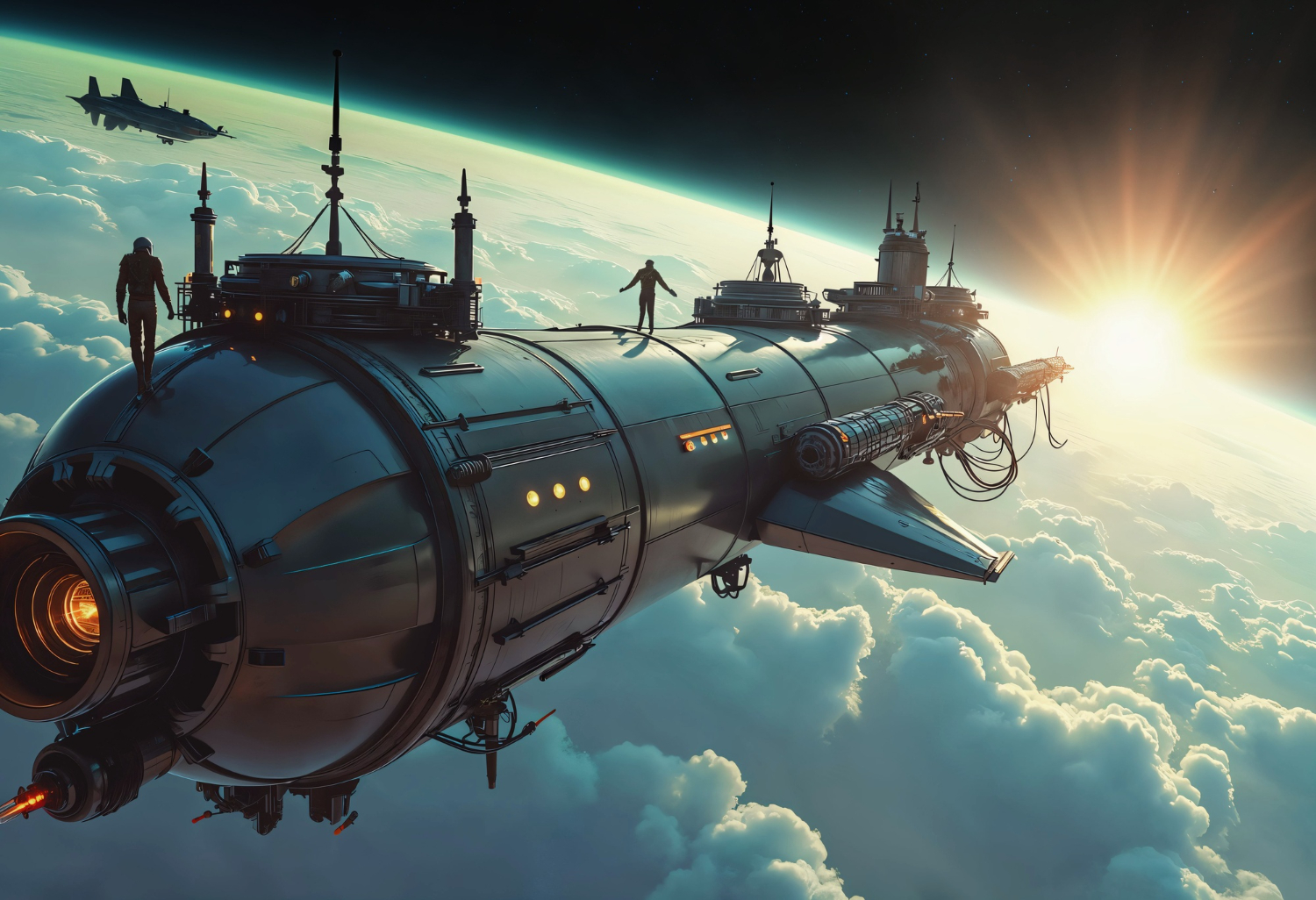
Introduction: Understanding the Concept of a Space Force Orbital Warship Carrier
A space force orbital warship carrier is a large, multi-purpose platform designed to operate in Earth’s orbit as a base for smaller craft, defensive systems, and long-range missions. While still a theoretical idea, it reflects how quickly space operations are evolving. Instead of relying only on ground-based command centers or temporary satellites, an orbital warship carrier imagines a stable, permanent structure that supports complex activities in space.
The concept matters because more nations and companies are sending vehicles into orbit, and the need for safe, organized, and secure operations continues to grow. A carrier could coordinate missions, protect important assets, and act as a central hub for space traffic, making it an influential idea for the future of space activity.
Space Force Orbital Warship Carrier Short Overview:
A space force orbital warship carrier is a large, orbit-based platform designed to support smaller spacecraft, protect vital space assets, and coordinate missions from Earth’s orbit. It acts like a mobile command base in space.
The Evolution of Military Platforms Toward Orbital Warship Carriers
The idea of a space force orbital warship carrier did not appear overnight. It grew out of decades of experimentation with satellites, reusable spacecraft, and advanced communication systems. Historically, military operations on Earth relied on carriers, bases, and stations to project stability and respond quickly to problems. As human activity reached beyond the atmosphere, these same principles began shifting upward.
Early satellites showed that technology could survive long periods in orbit, while the arrival of reusable rockets demonstrated that large structures could be placed in space more efficiently than before. Space stations then proved that people and machinery could operate for months at a time in microgravity conditions. Each step added a new layer of knowledge that supports the possibility of a carrier-like platform. Over time, the idea expanded from simple observation tools to a large orbital node capable of coordinating and supporting a wide variety of missions.
Quick Guide Table: Space Force Orbital Warship Carrier Overview
| Feature | Simple Explanation |
| Purpose | Acts as an orbital command base for missions and spacecraft management |
| Location | Operates in Earth’s orbit, not on the ground |
| Capabilities | Launching drones, supporting repairs, monitoring space activity |
| Benefits | Faster response, better protection, long-term mission control |
| Status | Currently a conceptual/future-tech idea |
Core Design Principles Behind an Orbital Warship Carrier
Designing a space force orbital warship carrier would require a focus on stability, adaptability, and long-term durability. Instead of a sleek, aerodynamic shape like an aircraft, the structure would be built for vacuum conditions, meaning its layout could be far more modular and open. A modular structure allows different sections to be replaced, expanded, or upgraded without rebuilding the entire platform.
The carrier would likely include docking bays, control stations, power systems, shielding layers, and living space for crew members. Because maintenance in space is challenging, every part of the carrier would need to be durable and easy to repair using automated machines or remote tools. The overall design must balance protection from radiation, efficiency of internal movement, and enough space to house equipment that supports missions across low Earth orbit and beyond.
Propulsion, Maneuvering, and Station-Keeping Requirements
An orbital warship carrier would not move quickly like a spacecraft designed for travel between planets. Instead, its propulsion would focus on small, steady adjustments that help it remain on course. These movements are called station-keeping, and they compensate for slight shifts caused by gravity, solar activity, or the influence of nearby objects.
To maneuver safely, the carrier would need reliable thrusters capable of gentle but precise motions. Because fuel in orbit is limited, the propulsion system would need to be efficient and possibly supported by solar-powered electric engines. While the carrier might not travel long distances regularly, the ability to reposition itself when needed is essential. This flexibility improves its resilience, allowing the carrier to avoid debris, shift to safer regions, or align itself with other spacecraft for coordinated missions.
Onboard Fleet Capabilities and Mission Payloads
A space force orbital warship carrier would serve as a host for smaller craft and mission payloads. These units could include drones for inspections, small shuttle-like vehicles for repairs, and robotic systems for gathering data or supporting ground teams. The purpose of this onboard fleet would be to handle specialized tasks without sending new vehicles from Earth every time something is needed.
The carrier would store, maintain, and deploy these units as required. For instance, small craft could travel to nearby satellites for troubleshooting, or drones could monitor space traffic to help prevent collisions. Instead of relying solely on remote instructions from Earth, the orbital warship carrier would act as a real-time command center for these missions, increasing efficiency and improving response times for any situation that occurs in orbit.
Defensive and Offensive Systems for Orbital Engagements
Because the orbital environment is crowded and always changing, a space force orbital warship carrier would need a combination of protective systems. “Defense” in orbit often means shielding from natural hazards such as radiation or debris, not only protection from hostile actions. The carrier would likely include thick protective layers, advanced tracking systems that monitor incoming debris, and tools to move away from danger zones.
Any offensive capabilities would be more about deterrence than active conflict. For example, disabling threats through non-destructive means—such as signal interference or strategic maneuvering—would help reduce risks without causing debris-producing impacts. The goal of these systems would be to maintain stability and avoid harm, reflecting the broader principles of responsible behavior in space.
Communication, Control, and AI Integration
A platform as large and complex as an orbital warship carrier would need strong communication networks to coordinate with ground stations, spacecraft, and other orbital assets. Real-time data exchange is crucial for safe operations, mission planning, and monitoring the environment. Advanced antennas, satellite links, and secure channels would help the carrier stay connected across long distances.
Artificial intelligence would also play a major role, supporting automatic monitoring, navigation assistance, maintenance routines, and quick assessments during unexpected events. AI would not replace human decision-making but would help manage the constant flow of information and reduce workload for crews. With these systems in place, the carrier could handle tasks smoothly and maintain safer operations by predicting issues before they become problems.
Logistical Support and Long-Duration Sustainment in Orbit
Long-term life in orbit requires steady access to power, fresh supplies, and reliable tools. A space force orbital warship carrier would depend heavily on solar energy, using large panels to generate electricity for daily operations. Internal systems must recycle air and water efficiently, reducing the need for frequent resupply missions.
Maintenance teams—human or robotic—would handle repairs, replace worn components, and ensure that life-support functions remain stable. Resupply missions from Earth would bring essential equipment or upgrades, but the carrier must be designed to operate independently for extended periods. This ability to sustain itself over the long term is what makes the concept appealing for future space planning.
Strategic Advantages of a Space Force Orbital Warship Carrier
The greatest advantage of a space force orbital warship carrier is its ability to serve as a central hub for many types of missions. Instead of launching new satellites for every purpose, a carrier could support flexible operations from a single, stable location. It could help nations protect important space assets, coordinate responses to emergencies, and monitor activity that might affect safety or communications.
Positioned in the right orbit, the carrier could also reduce response times during unexpected events, helping crews address challenges without waiting for support from Earth. This combination of presence, readiness, and adaptability gives an orbital warship carrier the potential to play a major role in shaping the future of orbital security and cooperation.
Policy, Ethics, and the Future of Orbital Military Infrastructure
As the idea of a space force orbital warship carrier becomes more popular, it raises important questions about responsible use of space. International agreements encourage peaceful cooperation, and any major infrastructure in orbit must respect those rules. The introduction of a carrier would require careful planning to avoid escalating tensions or increasing risks to satellites and space stations.
Clear policies would be needed to define the carrier’s purpose, limits, and oversight. Ethical considerations also matter, especially when it comes to protecting the space environment and preventing debris. A balanced approach—focused on safety, transparency, and long-term sustainability—would be essential to ensure that such a platform supports progress rather than conflict.
Conclusion: What the Orbital Warship Carrier Means for the Next Era of Space Defense?
A space force orbital warship carrier represents a bold step toward a future where operations in orbit are more coordinated, resilient, and capable. Although still theoretical, the concept combines many ideas already proven in space exploration, from long-duration stations to advanced robotics. Its value lies in the stability it could bring to an increasingly busy orbital environment, offering a place where missions can be supported efficiently and safely.
As space activities expand, the carrier could help protect infrastructure, improve coordination, and strengthen international cooperation. By focusing on responsible use and long-term sustainability, the orbital warship carrier could become a key part of how humanity manages the next stage of space operations.
FAQs
What is a Space Force Orbital Warship Carrier?
It is a future concept of a large orbital platform that supports smaller spacecraft, manages missions, and helps protect space assets from orbit.
Is the orbital warship carrier a real spacecraft?
Not yet. It’s a proposed future technology based on current space and military development trends.
What would the carrier be used for?
It would help with satellite protection, mission coordination, repairs, monitoring space traffic, and hosting small space vehicles.
How is it different from a space station?
A space station focuses on research and crew living. An orbital warship carrier focuses on mission support, readiness, and strategic operations.
Would the carrier have weapons?
Any systems would likely focus on protection, tracking, and avoiding threats rather than destructive combat, to prevent space debris.
Disclaimer:
This article is for informational purposes only. The concept of a space force orbital warship carrier is theoretical and may not represent any active or official military project. All descriptions are general explanations based on publicly available knowledge and future-tech concepts.

My name is Mustafa, and I have been blogging for over 5 years. I am passionate about sharing complete, accurate, and helpful information with my readers. Along with managing content on The Matcha Read, I also contribute blog posts to premium websites. My goal is to provide valuable insights in a clear and easy-to-understand way, so every reader walks away with useful knowledge.