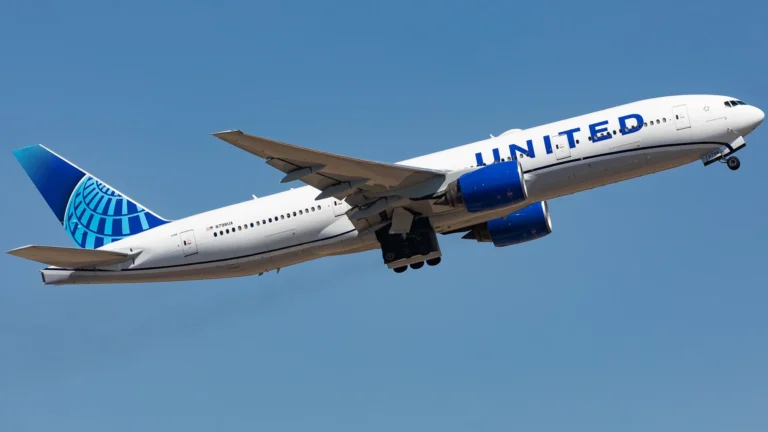
On July 7, 2025, United Airlines flight UA82 — a long‑haul Boeing 787‑9 Dreamliner bound from Newark, USA, to New Delhi, India — declared an emergency shortly after takeoff. The plane turned back and landed safely in Newark, sparking widespread interest across the aviation community and among travellers. For many people, this incident raised questions: what exactly went wrong, how did the crew respond, and what does it mean for long‑haul flights?
This event matters for anyone who flies long distances, as it highlights how even modern aircraft can experience technical problems — and how pilots and airlines manage those situations to keep passengers safe.
United Airlines Flight UA82 Emergency Short Overview:
United Airlines Flight UA82 emergency refers to the 2025 incident where the long-haul flight returned to Newark after a critical avionics cooling system issue, handled safely by the crew with no injuries.
Timeline of the UA82 Emergency
UA82 departed from Newark Liberty International Airport (EWR) late in the evening, heading toward Indira Gandhi International Airport (DEL) in New Delhi. The flight climbed to its cruising altitude after takeoff. Not long after reaching cruising altitude — about 45 minutes into the flight — the flight crew detected a malfunction in the aircraft’s electronics cooling system.
Recognizing that the cooling system was critical for the aircraft’s avionics — which control communication, navigation, and other essential systems — the crew declared an emergency (they “squawked 7700,” a standard transponder code for in‑flight emergencies).
With priority clearance, UA82 made a U‑turn over the Atlantic/Gulf region and began a controlled descent back toward Newark. About two hours after departure, the aircraft landed safely back at EWR at 11:15 p.m. local time.
No injuries or visible damage were reported. Once on the ground, the plane was taken out of service for inspection, while all passengers and crew disembarked safely.
Quick Guide Table: UA82 Emergency Overview
| Aspect | Details |
| Flight | United Airlines UA82 (Newark → New Delhi) |
| Date | July 7, 2025 |
| Aircraft | Boeing 787‑9 Dreamliner |
| Issue | Electronics cooling system malfunction |
| Crew Action | Declared emergency, returned to Newark safely |
| Passenger Impact | No injuries; flights delayed or rebooked |
| Investigation | Ongoing; reviewing root cause and safety protocols |
| Key Takeaway | Safety protocols and crew training ensured a secure landing |
Crew and Passenger Response During the Flight
From the moment the pilots detected the fault, the flight crew acted with caution and discipline. By declaring the emergency immediately, they ensured the aircraft received priority handling from air traffic control. The decision to return was done “as a precaution,” rather than waiting to see if the problem worsened.
Passengers onboard described a calm, professional atmosphere. According to reports, announcements were made smoothly, and the descent and return flight were steady and controlled. No panic, no chaos — just routine emergency procedures in action.
Safety procedures unfolded as standard: the crew monitored the situation, communicated with ground staff, maintained contact with air traffic control, and prepared for a safe landing. Once on the ground, emergency protocols allowed for immediate inspection of the aircraft before any further flights.
Cause and Investigation of the UA82 Incident
Initial reports indicate that the problem with UA82 was caused by a malfunction in the plane’s electronics cooling system. This system ensures that avionics — the communication, navigation, and flight‑control computers — remain at safe operating temperatures. If avionics overheat or fail, it could severely compromise flight safety.
Because the flight was on a long over‑water route to India, with many hours ahead over the Atlantic, continuing with a cooling‑system issue would have been risky. Given that potential, the crew’s decision to return was the most responsible choice.
Investigations are now underway, led by airline maintenance teams and overseen by aviation safety regulators. They will look at the root cause of the cooling‑system failure — whether a mechanical fault, manufacturing defect, or maintenance lapse. The affected aircraft has been grounded until inspections and any necessary repairs are complete.
Depending on the findings, possible outcomes could involve updated maintenance protocols, system upgrades, or reviews of similar aircraft in the fleet to ensure the same issue does not recur.
Safety Measures and Airline Protocols
Commercial airlines — including United — have strict procedures for handling emergencies. From the moment of detection, pilots follow a checklist that includes assessing risk, communicating with ground control, and deciding whether to continue or return. For critical systems like avionics, a precautionary return is often the safest choice.
Staff is trained regularly to respond to rare emergencies, including cooling system failures, engine problems, cabin depressurization, or smoke alerts. Training covers communication with passengers, coordination with air traffic control, and executing safe landings or diversions when needed. In the case of UA82, this training and protocol worked exactly as intended.
Modern aircraft like the Boeing 787‑9 Dreamliner are equipped with redundant systems and safeguards. But even so, technical faults can occur. UA82’s incident reinforces that safety is not just about technology — it’s also about human judgment, protocol adherence, and timely decision‑making.
One key lesson is that passengers are generally safer when crews act early and decisively. Waiting until a problem becomes urgent can increase risk; in this case, acting at the first sign of malfunction helped avoid any danger.
Impact on Passengers and Flight Operations
For travelers on UA82, the emergency meant an abrupt return and disruption of plans. Flights to New Delhi were cancelled or delayed, and passengers were rebooked on alternate flights. In many cases, airlines provided support: meal vouchers, hotel accommodations, and new tickets — depending on the next available flights.
Emotionally, such incidents can be stressful: long‑haul flights often involve jet lag, tight connections, business commitments, or special occasions. A mid‑air emergency — even if resolved calmly — adds uncertainty and can shake confidence. However, the fact that all passengers and crew landed safely, and were cared for on the ground, helped minimize anxiety and disappointment.
On a broader scale, UA82’s emergency may prompt airlines to review maintenance schedules, especially for critical systems like avionics cooling. For frequent flyers or those booking long overseas journeys, it may also influence how we think about airline reliability and the importance of transparent communication when issues arise.
Media Coverage and Public Reaction
News outlets around the world reported the UA82 emergency within hours. Headlines noted the “electronic cooling system failure,” the “return to Newark,” and the safe landing — often emphasizing that no one was injured.
Social media and aviation‑interest forums saw a mix of concern, relief, and questions. Some passengers asked whether the technical issue meant long-term problems for Boeing 787s; others praised the crew’s calm handling. On one flight‑tracking community, a user wrote:
“My parents were on this flight … we just got booked for another one via Munich in 2 days.”
Some common misconceptions emerged: a few people worried that “electronics cooling” meant cabin-air conditioning, or that the plane had a fire. Aviation reports clarified that the cooling-system issue related to avionics — and there was no fire or smoke. The distinction helped reassure many that the situation, though serious, was handled safely and professionally.
Overall public reaction blended relief (everyone was safe), respect for the crew, and appreciation for good communication — but also a reminder of the fragility and complexity of modern air travel.
Conclusion
The 2025 emergency involving United Airlines flight UA82 serves as a strong reminder that even modern, long‑haul flights can face technical challenges. What matters most is how those challenges are handled. In this case, the crew’s quick detection of a malfunction, decisive action to declare an emergency, and careful execution of a return to Newark ensured everyone on board remained safe.
For passengers, UA82’s story is a reassurance: airline safety relies not only on technology, but on trained professionals, clear protocols, and readiness to act. For the aviation industry, it highlights the importance of maintenance, inspection, and transparency when systems fail.
If you ever find yourself on a long flight, incidents like UA82 remind us that safety is the top priority — and that sometimes, turning back is the bravest, smartest move.
FAQs
What caused the United Airlines Flight UA82 emergency?
The emergency was triggered by a malfunction in the aircraft’s electronics cooling system, which affects avionics crucial for flight safety.
Were there any injuries during the UA82 incident?
No, all passengers and crew landed safely, and there were no reported injuries.
How did the flight crew respond?
They declared an emergency, maintained calm communication, and safely returned the plane to Newark.
Did the UA82 emergency affect other flights?
Yes, the return caused schedule delays and rebooking for passengers, but all safety protocols were followed.
What is being done to prevent similar incidents?
Investigations are ongoing, and airlines may update maintenance, inspection, and safety protocols for similar aircraft systems.
Disclaimer:
This article is for informational purposes only. Details are based on publicly reported events. It does not replace official airline statements or safety guidance. Always follow airline instructions and official updates during emergencies.

My name is Micheal Lovell. I am a dedicated travel writer with over 7 years of experience in creating informative and engaging travel content. Throughout my journey, I have published travel blogs that help readers explore new destinations, plan better trips, and discover local cultures and hidden gems around the world. My goal is to provide practical travel insights through well-researched articles that inspire and guide travelers at every step of their journey.