Introduction
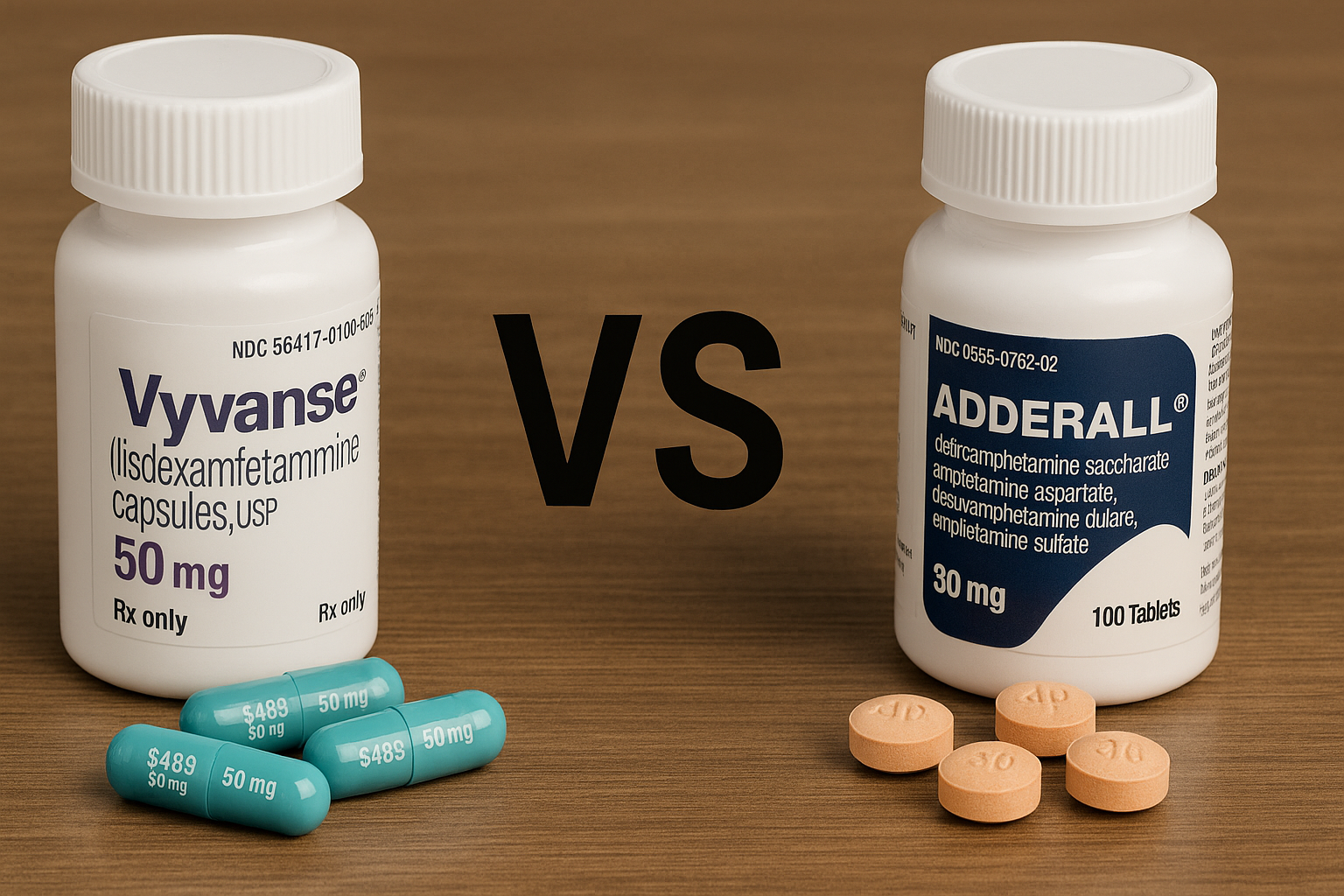
Attention-deficit/hyperactivity disorder, or ADHD, is a common condition that affects both children and adults. It can make it difficult to focus, stay organized, or manage impulsive behaviors. Fortunately, there are several treatments available, including behavioral therapy and medication. Among the most commonly prescribed medications are Vyvanse and Adderall.
Both drugs are stimulants that help improve focus and reduce hyperactivity, but they have important differences in how they work, how long they last, and their side effects. If you’re exploring treatment options, it can be confusing to understand which medication might be better suited for you or a loved one. This article provides a clear, unbiased comparison of Vyvanse vs Adderall, highlighting key aspects like effectiveness, duration, safety, and practical tips to help guide your discussion with a healthcare provider.
Vyvanse vs Adderall Short Overview:
Vyvanse and Adderall are stimulant medications commonly prescribed for ADHD. They help improve focus and reduce impulsivity, but differ in how quickly they work, how long they last, and their side effects.
Understanding Vyvanse and How It Works
Vyvanse is the brand name for lisdexamfetamine, a type of stimulant medication designed to treat ADHD. It works by increasing certain chemicals in the brain that help improve focus, attention, and impulse control. Unlike some other stimulants, Vyvanse is a “prodrug,” which means it needs to be converted in the body to become active. This process allows for a slower, steadier release, which can reduce the risk of sudden spikes in energy or mood.
Vyvanse is typically prescribed to children over six, teenagers, and adults who have been diagnosed with ADHD. Some doctors may also prescribe it for certain cases of binge eating disorder in adults. It is taken orally, usually once a day in the morning, with effects lasting approximately 10 to 14 hours, which makes it convenient for all-day symptom management.
Because of its long-acting nature, Vyvanse tends to provide smoother, more consistent symptom control throughout the day. This can be especially helpful for people who struggle with fluctuating focus or mood.
Understanding Adderall and Its Mechanism
Adderall is another widely prescribed stimulant for ADHD. Unlike Vyvanse, Adderall contains a combination of four amphetamine salts, which makes it immediately active once ingested. This medication works by increasing certain neurotransmitters in the brain, improving concentration, attention span, and impulse control.
Adderall can be prescribed to children, teenagers, and adults diagnosed with ADHD. It comes in two main forms: immediate-release (IR) and extended-release (XR). Immediate-release tablets typically last around 4 to 6 hours, while the extended-release version can last 8 to 12 hours, depending on the individual. The flexibility in dosing allows healthcare providers to tailor the medication schedule to a patient’s lifestyle, such as splitting doses for school or work schedules.
Because Adderall acts quickly, some people notice a faster improvement in focus, but this can also mean the effects may fluctuate more throughout the day compared to Vyvanse.
Key Differences Between Vyvanse and Adderall
When comparing Vyvanse vs Adderall, several factors stand out. One of the main differences is how quickly they take effect. Adderall generally works faster because it doesn’t require conversion in the body, while Vyvanse’s slower activation can lead to a smoother, longer-lasting experience.
Another key distinction is the duration of effects. Vyvanse often lasts longer, making it easier for some people to manage their day with a single morning dose. Adderall offers more flexibility with immediate-release and extended-release forms, which can be beneficial for those who need short bursts of focus or prefer splitting doses.
Prescription and dosage differences are also worth noting. Vyvanse is available in a single daily dose with varying strengths, while Adderall offers multiple strengths and release types. This allows for more customized dosing but may require careful timing and monitoring.
In terms of abuse potential and safety, both medications carry risks because they are stimulants. Vyvanse’s slower activation is thought to lower the potential for misuse compared to Adderall, which can produce a more immediate “rush” if misused. Still, both drugs should always be used under medical supervision, with proper storage and adherence to the prescribed dose.
Quick Comparison Table: Vyvanse vs Adderall
| Feature | Vyvanse | Adderall |
| Active Ingredient | Lisdexamfetamine | Mixed amphetamine salts |
| Onset of Action | Slower (converted in the body) | Faster (active immediately) |
| Duration of Effect | 10–14 hours | 4–6 hours (IR) / 8–12 hours (XR) |
| Dosing | Once daily in the morning | IR multiple times / XR once daily |
| Abuse Potential | Lower (slow release) | Higher (immediate effect) |
| Common Side Effects | Appetite loss, insomnia, dry mouth | Appetite loss, insomnia, mood swings |
| Best For | All-day focus, steady symptom control | Flexible dosing, quick symptom relief |
Side Effects and Safety Considerations
Like all medications, Vyvanse and Adderall can cause side effects. The most common ones include decreased appetite, difficulty sleeping, dry mouth, and mild increases in heart rate or blood pressure. Some people may also experience anxiety, irritability, or digestive issues.
There are rare but serious risks associated with these medications. Stimulants can affect heart rhythm, blood pressure, and, in uncommon cases, mental health conditions such as mood swings or psychosis. For these reasons, it’s important to talk to a healthcare provider before starting either medication, especially for individuals with pre-existing heart conditions or psychiatric disorders.
Precautions also include avoiding alcohol, monitoring for potential drug interactions, and regular follow-ups to ensure the medication is working effectively and safely. Patients should seek immediate medical advice if they notice severe side effects, such as chest pain, fainting, or extreme mood changes.
Choosing Between Vyvanse and Adderall
Deciding between Vyvanse vs Adderall depends on several factors. Age, lifestyle, work or school schedules, and individual response to medication all play a role. Some people may respond better to Vyvanse’s long-lasting, steady effects, while others may benefit from Adderall’s flexibility and faster onset.
Individualized treatment is key. No one medication works for everyone, and what helps one person focus and manage ADHD may not be as effective for another. Working closely with a healthcare provider ensures the choice is based on medical history, symptom patterns, and personal preferences. This collaborative approach can also help minimize side effects and improve overall treatment satisfaction.
Real-World Experiences and Practical Tips
Many patients report that Vyvanse provides a smoother, all-day focus with fewer ups and downs, which can make daily routines easier to manage. Adderall users often notice quicker improvements in attention, which can be beneficial for specific tasks or periods that require intense focus.
Practical tips for managing side effects include taking medication early in the day to reduce insomnia, maintaining a balanced diet to counter appetite changes, and staying hydrated. Regular exercise and structured routines can also enhance the effectiveness of ADHD medication.
Lifestyle considerations matter as well. Both medications can affect sleep, appetite, and energy levels, so understanding how your body responds and adjusting routines accordingly can make a noticeable difference. Open communication with a healthcare provider about experiences, both positive and negative, helps ensure the best outcomes.
Conclusion
Vyvanse vs Adderall are both effective ADHD medications, but they differ in how they work, how long they last, and their side effect profiles. Vyvanse tends to provide longer, smoother symptom control, while Adderall offers faster onset and flexible dosing options. Both carry potential risks and should be taken under professional guidance.
Ultimately, choosing the right medication is a personal decision that should involve careful consideration of lifestyle, symptom patterns, and medical history. By understanding the differences between Vyvanse and Adderall, patients and caregivers can make informed decisions and have meaningful discussions with healthcare providers to find the most suitable ADHD treatment.
FAQs
Which is better: Vyvanse or Adderall?
There’s no one-size-fits-all answer. Vyvanse may be better for long-lasting focus, while Adderall may suit those needing faster or flexible dosing.
How long does Vyvanse last compared to Adderall?
Vyvanse typically lasts 10–14 hours. Adderall lasts 4–6 hours for immediate-release and 8–12 hours for extended-release.
Can Vyvanse and Adderall be used together?
No, taking both at the same time is unsafe. Always follow your doctor’s guidance.
What are common side effects?
Both may cause appetite loss, insomnia, dry mouth, or mild anxiety. Rarely, they can affect heart rhythm or mental health.
Are Vyvanse and Adderall addictive?
Both carry some abuse risk because they are stimulants. Vyvanse has a slightly lower risk due to slower activation.
Disclaimer:
This article is for informational purposes only and is not a substitute for professional medical advice, diagnosis, or treatment. Always consult a licensed healthcare provider before starting, stopping, or changing any medication.

My name is Mustafa, and I have been blogging for over 5 years. I am passionate about sharing complete, accurate, and helpful information with my readers. Along with managing content on The Matcha Read, I also contribute blog posts to premium websites. My goal is to provide valuable insights in a clear and easy-to-understand way, so every reader walks away with useful knowledge.